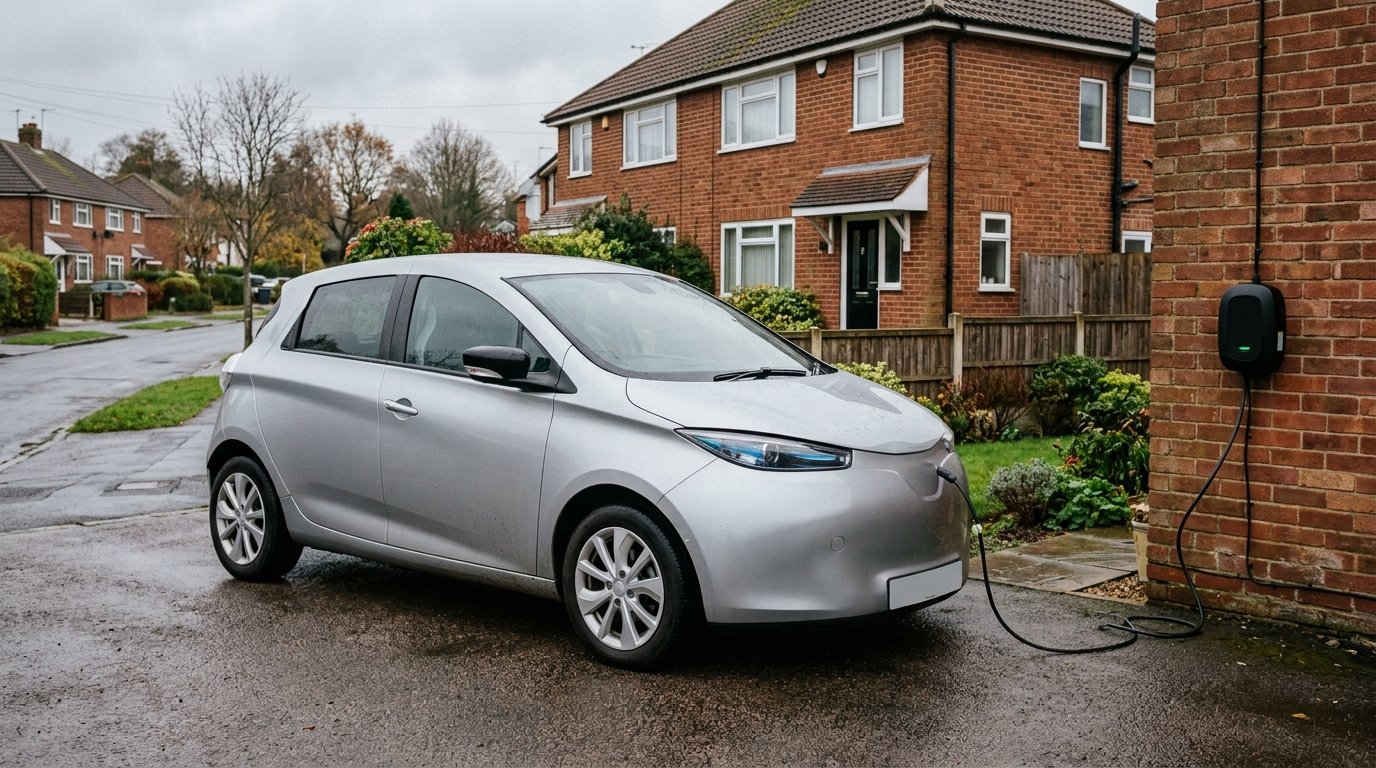
A used Nissan Leaf 40kWh in the UK typically sells for £8,000–£13,000. Price depends on age, mileage and battery health, with 2018–2019 examples the sweet spot for price versus remaining range. The single most important check is battery State of Health (SoH), which you can pull with the LeafSpy app. Treat anything below 85% SoH on a car under 60,000 miles as a red flag. This generation lacks active thermal management and degrades faster than the later 62kWh e+. I test-drove three Leafs in the same week last year while helping a friend shop. Two cars, same age, had nearly 20 miles of difference in remaining range. Degradation on this model isn’t a formality. It’s the whole decision.
Why the 40kWh Leaf Still Makes Sense in 2026
The Nissan Leaf 40kWh (2017–2021) was never the fastest-charging or longest-range EV in its class. But it’s cheap, mechanically simple, and parts are widely available through UK Nissan dealers and independent EV specialists. City and short-commute drivers who don’t need 300 miles of range get one of the lowest-cost routes into EV ownership on the used market. That said, most buyers make the same mistake: they skip the battery health check on a used Nissan Leaf 40kWh entirely.
Battery Health on a Used Nissan Leaf 40kWh: The Real Buying Decision
Nissan’s early Leaf batteries, including the 40kWh pack, use passive air cooling rather than the liquid thermal management most competitors adopted. Heat cycling degrades the battery faster as a result, especially on cars that saw frequent DC rapid charging or spent time in warmer climates before import. Practically, this means:
- Check SoH with LeafSpy Pro (an Android/OBD dongle combo, roughly £15–£20 for the adapter) before agreeing a price. Sellers rarely volunteer this figure unprompted.
- Ask for the dashboard capacity bars. The Leaf shows 12 bars when new. Losing the first bar typically means around 85% SoH; losing two bars means closer to 78%.
- Get the full service history, including any battery warranty claims. Nissan’s original 8-year/100,000-mile battery warranty still covers some 2018–2019 cars bought new in the UK, guaranteeing against dropping below 9 bars.
UK Case Study: Two Leafs, Same Age, Different Story
Both cars were 2019 plates with roughly 34,000 miles. The first had one private owner who mostly drove a 12-mile daily commute and charged overnight on a home wallbox. It showed 89% SoH, close to like-new performance. The second was a former fleet car, DC rapid-charged almost daily at a depot. It showed 71% SoH — a real range cut, dropping from a realistic 150 miles to closer to 105. Same model year, same mileage, same asking price bracket. Charging history, not the odometer, was what actually mattered.
Common Faults on the Used Nissan Leaf 40kWh
| Issue | What to Check | Typical Repair Cost (UK) |
|---|---|---|
| Battery degradation | SoH via LeafSpy, dashboard capacity bars | £4,000–£6,500 for full pack replacement (rarely needed if SoH is checked pre-purchase) |
| 12V auxiliary battery failure | Check for warning lights, ask when last replaced | £80–£150 |
| Charge port corrosion | Inspect physically, especially on cars without a garage | £150–£300 |
| Infotainment/telematics glitches | Test Bluetooth, NissanConnect EV app pairing | Usually a software reset, no cost |
| Suspension bushings wear | Listen for clunks over speed bumps on test drive | £120–£250 per corner |
What a Fair UK Price Looks Like for a Used Nissan Leaf 40kWh
As of mid-2026, expect to pay roughly £8,000–£9,500 for a 2017–2018 Leaf 40kWh with average mileage and unverified battery health. That rises to £11,000–£13,000 for a 2019–2021 example with a documented SoH above 85% and full service history. Cars priced well below this range are usually cheap for a reason: undisclosed battery health, or an ex-fleet history of heavy rapid charging.
Pricing here reflects live UK market data as of publication. See our editorial disclaimer for how we source and update these figures. If a seller won’t allow a LeafSpy check before purchase, walk away regardless of price.
Insurance, Warranty and Running Costs
Insurance groups for the 40kWh Leaf sit in the low-to-mid range compared with similarly priced petrol hatchbacks. Servicing costs run lower too, thanks to fewer moving parts — no cambelt, no oil changes, and regenerative braking cuts brake wear. Home charging is the main ongoing cost, and it’s cheap: a full charge on a typical UK off-peak tariff runs roughly £2–£3. Battery health aside, the 40kWh Leaf remains one of the cheapest cars to run day-to-day on the used market.
Nissan Leaf 40kWh vs Petrol Supermini: The Real Running Cost Gap
It’s worth putting real numbers next to the general claim that EVs are cheaper to run. A typical petrol supermini doing 8,000 miles a year at 45mpg costs roughly £1,000–£1,100 in fuel at current UK pump prices. Add an annual service around £150–£200, plus consumables like brake pads and cambelt replacement over time.
The same annual mileage on a used Nissan Leaf 40kWh costs roughly £250–£350 in electricity. That’s charged mostly at home on an off-peak tariff, even accounting for reduced real-world range from degradation. Servicing costs less too, since there’s no engine oil, spark plugs, or exhaust system. Over three years, the running-cost gap easily clears £2,000–£2,500 in the Leaf’s favour. See our EV Battery guides for how that math shifts on longer-range models.
Who Should Skip the Used Nissan Leaf 40kWh
This isn’t the right car for everyone. If your daily driving regularly tops 80–90 miles round trip, the 40kWh becomes a gamble rather than a value buy. Look at the 62kWh e+ or a different manufacturer instead.
No home or workplace charging changes the calculation too. You’d be relying on public rapid charging for most top-ups, and the Leaf’s CHAdeMO connector is increasingly sidelined as UK networks shift investment toward CCS. Check Zap-Map’s Nissan Leaf charging guide for current CHAdeMO site coverage before committing. And if you won’t run a LeafSpy check before buying — whether from unwillingness or a blocking seller — look at a newer used EV with an active battery warranty instead. Let someone else carry the degradation risk.
Frequently Asked Questions
Q: Can I negotiate the price down if a used Nissan Leaf 40kWh has lower SoH?
A: Yes, and you should. A rough informal rule: knock £100–£150 off the asking price for every percentage point of SoH below 85%, adjusted for mileage and condition. A car at 76% SoH priced as if it were at 90% is overpriced by several hundred pounds. Most private sellers move on price once you show them the LeafSpy readout.
Q: What SoH percentage should I look for on a used Nissan Leaf 40kWh?
A: Above 85% is good for a car under 60,000 miles. 75–85% is acceptable if the price reflects it. Below 75% means a meaningfully smaller real-world range, and the price should reflect that too.
Q: Is the 40kWh Leaf or the 62kWh e+ the better used buy?
A: The e+ has a larger, better-managed battery and longer range, but costs considerably more used. The 40kWh wins on value for short commutes and city driving. The e+ earns its premium on regular longer trips.
Q: Does the Nissan Leaf 40kWh qualify for any UK EV grants in 2026?
A: No. The Plug-in Car Grant ended in 2022 and never applied to used purchases anyway. Some local councils offer separate charger installation grants — check with your local authority.
Q: How do I check a used Nissan Leaf’s genuine mileage and history?
A: Run an HPI check for outstanding finance and mileage discrepancies, and request the full service book. A free DVSA MOT history check shows recorded mileage at each test, which helps flag clocking.
Quick Pre-Purchase Checklist
Before you hand over a deposit on a used Nissan Leaf 40kWh, run through this list:
- SoH via LeafSpy Pro — get the actual number, not just the dashboard bars.
- Full service history, including any battery warranty claims.
- HPI check for outstanding finance and mileage discrepancies.
- DVSA MOT history to confirm recorded mileage at each test.
- Charge port inspection for corrosion, especially on cars without a garage.
- Test drive over speed bumps, listening for suspension bushing wear.
- Confirm the seller allows an independent LeafSpy check. If they refuse, walk away.
None of these checks take long. Together they take under an hour, and they’re the difference between a genuinely good used EV purchase and an expensive mistake dressed up as a bargain.
Final Verdict
A used Nissan Leaf 40kWh is a genuinely sensible buy in 2026, provided your driving fits within its realistic range after degradation. Verify battery health before handing over money, not after. Don’t rely on the seller’s word or the dashboard range estimate alone. Twenty pounds for a LeafSpy adapter and twenty minutes of your time is the cheapest insurance you’ll buy on this car.