The CATL Qilin battery UK coverage has mostly been breathless tech reporting — “1,000 km of range!” — without answering the question British drivers actually have: does any of this change what I should buy, and when? As of July 2026, the CATL Qilin battery UK timeline for right-hand-drive cars remains unconfirmed, and the honest answer is that nothing available today reflects this technology.
Not yet, and possibly not for two or more years. But the technology is real, the numbers are independently corroborated, and several companies that supply UK cars are already in CATL’s supply chain. So it’s worth understanding what was actually announced, what it would mean in UK conditions, and what a realistic arrival timeline looks like.
What CATL Qilin Battery UK Buyers Need to Know About the Launch
On April 21, 2026, CATL officially launched its third-generation Qilin battery at its annual Tech Day event in Beijing. The launch covered several distinct products that UK coverage has been blurring together.
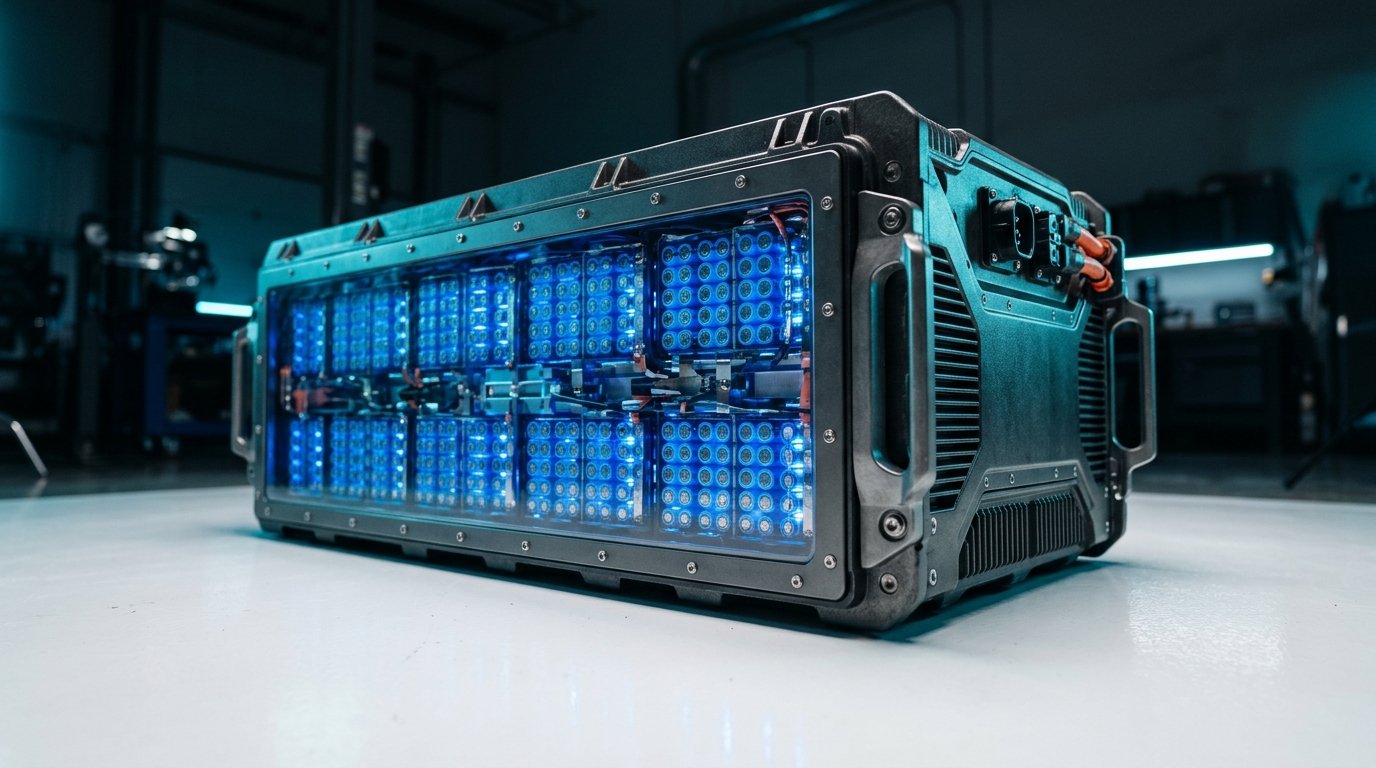
The third-gen Qilin NMC battery is the headline piece. It achieves a volumetric energy density of 600 Wh/L and a gravimetric energy density of 280 Wh/kg. A 125 kWh pack gives a vehicle a driving range of more than 1,000 km, weighing just 625 kg — 255 kg lighter than a comparable LFP battery. That weight reduction matters beyond range: vehicles accelerate from 0 to 100 km/h 0.6 seconds faster, and braking distance from 100 km/h is cut by 1.44 metres.
The Qilin Condensed Battery is the more experimental product. CATL’s compressed gel chemistry replaces liquid electrolyte, making for a more stable cell — CATL claims you could cut it in half and it wouldn’t leak fluid or catch fire. At 350 Wh/kg gravimetric energy density, executive-class sedans can achieve 1,500 km range and full-size SUVs 1,000 km. This is the chemistry that generates the 930-mile headlines. It’s already used in eVTOL aircraft and is being adapted for passenger cars, but is further from mass production than the third-gen NMC.
These are two different products. Conflating them — as most UK coverage has done — leads to confusion about what’s actually coming and when.
What CATL’s 1,000 km Range Claim Actually Means on UK Roads
The 1,000 km figure comes from CLTC testing — China’s domestic standard. WLTP, which UK cars are rated against, consistently returns 15-25% lower figures. That puts a realistic WLTP equivalent of the third-gen Qilin NMC at around 750-850 km (470-530 miles) in ideal conditions.
British weather adds a second filter. In range testing across UK-market EVs, winter motorway runs regularly come in 20-25% below WLTP. Apply that to a 500-mile WLTP figure and you’re looking at a realistic worst-case winter range of around 375-400 miles.
Still the longest range of any EV available in Europe — the current benchmark is the Mercedes EQS at 574 miles WLTP, using a much larger and heavier pack. CATL’s third-gen chemistry would beat or match that figure at substantially lower pack weight. The practical upshot for UK buyers isn’t doing 470 miles without stopping. It’s that range anxiety disappears entirely. You’d charge at home, arrive anywhere in Britain without planning around chargers, and use public rapid chargers for convenience rather than necessity.
Which UK Cars Already Use CATL Batteries
CATL supplies BMW, Volkswagen Group, Tesla, and Ford among others. Tesla uses CATL cells in Standard Range and some Long Range variants. BMW has sourced from CATL for over a decade — several iX and i4 variants use CATL cells in specific markets. VW Group, which includes Audi, Skoda, and SEAT, is also a major customer.
If the third-gen Qilin enters volume production and gets adopted by these manufacturers, the route to UK roads runs through existing supply relationships rather than requiring new partnerships. A chemistry upgrade within existing contracts is commercially straightforward compared to establishing a new supplier relationship from scratch.
What’s uncertain is timing. CATL hasn’t confirmed which manufacturers will adopt third-gen Qilin chemistry or when. “A year or two” estimates circulating in UK coverage are likely optimistic for UK-specific models, which go through additional homologation and right-hand-drive adaptation on top of whatever China-market timeline CATL announces.
CATL Qilin Battery UK Charging Speed: The Real Story
Range gets the headlines, but charging speed is more practically significant for UK motorway use. The Shenxing III — CATL’s LFP ultra-fast charging battery launched at the same April event — goes from 10% to 80% in 3 minutes and 44 seconds, reaching 98% in 6 minutes and 27 seconds. At -30°C, 20% to 80% takes just over nine minutes. The third-gen Qilin NMC delivers comparable charging speeds while carrying higher energy density.
The UK public charging context is the limiting factor. The fastest chargers at Gridserve’s Electric Highway and BP Pulse sites currently run at 150-350 kW. Sub-5-minute charging requires compatible ultra-rapid hardware that doesn’t exist on UK motorways at meaningful scale. When CATL’s batteries arrive in UK cars, the network bottleneck will matter more than the battery chemistry — for several years at least.
What Should UK Buyers Actually Do With This Information?
Nothing actionable, if you’re buying in the next 12 months. The CATL Qilin battery UK arrival in consumer cars has no confirmed timeline for right-hand-drive vehicles. China-first production for third-gen NMC is expected to ramp through 2026-2027. For UK variants with full WLTP type approval, 2028 is a realistic earliest estimate, with 2029 more likely for mainstream availability.
If you’re buying in 2026, the best sub-£40k options remain the MG4 Urban, Hyundai Ioniq 6, Tesla Model 3, and Kia EV6. Use our petrol vs EV running cost calculator to work out whether switching makes financial sense at your mileage, and our real-world range estimator to strip WLTP optimism from whichever car you’re considering. For broader context on current battery chemistry, see our EV battery technology guide.
If you’re buying in 2028 or later, the picture looks genuinely different. BMW’s next-generation models and VW Group’s post-2027 lineup are plausible early candidates for CATL’s third-gen chemistry. By then, the UK rapid charging network should have matured enough to unlock the fast-charging capability these packs can deliver.
FAQ
Q: What is the CATL Qilin battery UK range in real-world driving?
A: The third-gen Qilin NMC targets over 1,000 km on China’s CLTC test. Converted to WLTP and adjusted for UK winter motorway conditions, a realistic real-world range would be approximately 375-400 miles — still significantly longer than any EV currently available in the UK.
Q: Which UK cars already use CATL batteries?
A: Tesla Model 3 Standard Range and some Long Range variants use CATL cells. BMW uses CATL in several iX and i4 variants in specific markets. Volkswagen Group models including some Audi and VW EVs also source from CATL. None currently use third-gen Qilin chemistry — that is still in early production stages.
Q: When will the CATL Qilin battery reach UK cars?
A: No confirmed timeline exists for UK-market vehicles. China-first production is ramping through 2026-2027. For right-hand-drive UK variants with WLTP type approval, 2028 is a realistic earliest estimate.
Q: Should I wait for this technology before buying an EV?
A: No — not if you need a car in the next 12-18 months. The EVs available now offer strong running cost savings over petrol, and the range anxiety argument for waiting doesn’t hold up if you have home charging. If you’re genuinely 2-3 years from needing to buy, the calculation may be different.
Q: Does CATL supply batteries directly to UK consumers?
A: No. CATL is a B2B manufacturer supplying cells to automakers. You can’t buy a CATL battery directly — the brand on the car is what matters for purchase decisions.