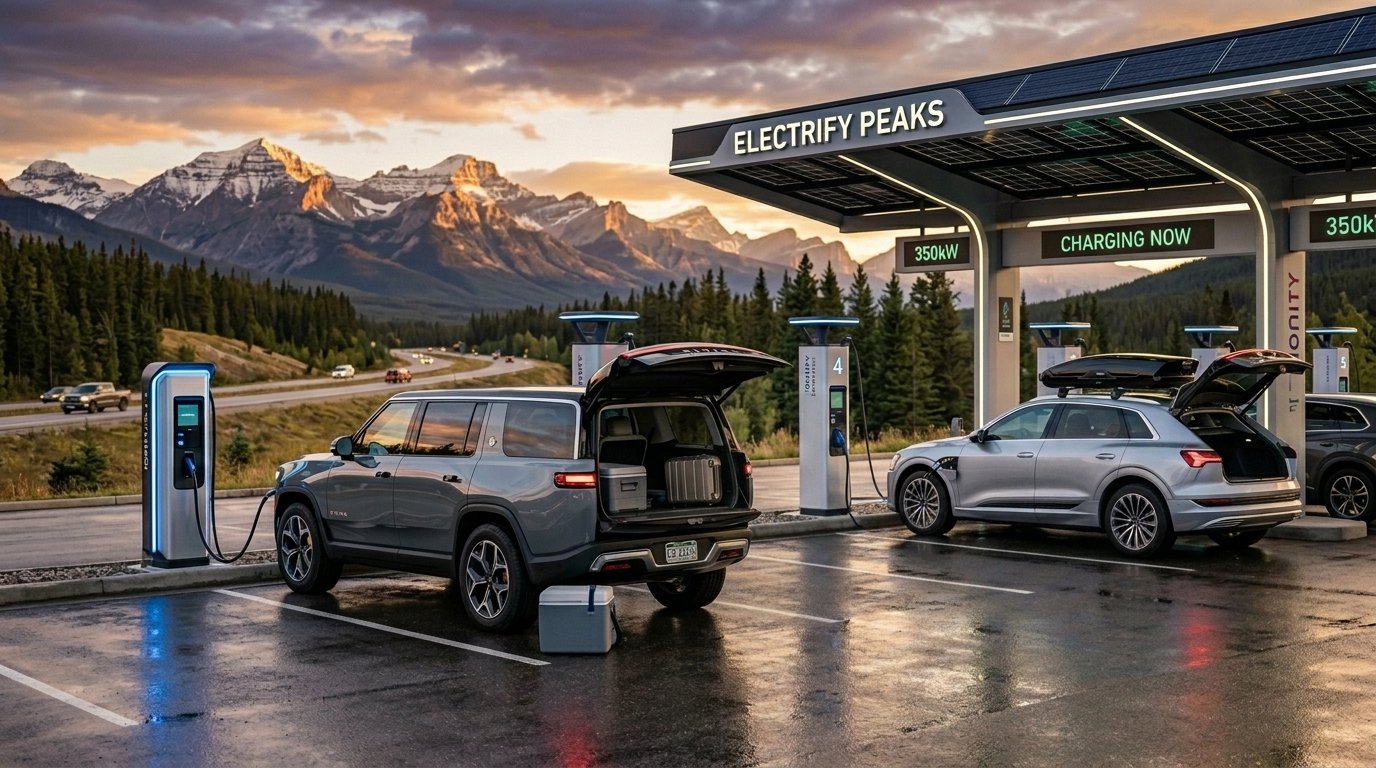
We spent a Saturday last spring comparing the best electric SUVs UK families can actually buy in 2026 — not just what spec sheets say, but what they feel like with kids, kit, and a long motorway run involved.
Five hours later, we’d sat in more boots, argued about more third rows, and read more charging speed figures than any reasonable person should in one afternoon. But we came out of it knowing what actually matters when you’re buying one of the best electric SUVs UK families can get in 2026 — and it’s not what the comparison articles lead with.
As of June 2026, the UK market for family electric SUVs is genuinely strong. Several of these cars are better than their petrol equivalents at the same price. That wasn’t something you could say in 2021.
What “Family-Friendly” Actually Means
Most buying guides rank EVs by WLTP range, 0-60 times, and sticker price. Those things matter — but they’re not what you think about after the first month of ownership.
The real questions are: can a double buggy fit in the boot without folding a rear seat? Does the third row work for adults on a two-hour motorway run, or only for children under ten who haven’t yet developed opinions about legroom? Can you charge to 80% at a Gridserve hub in under 30 minutes before the kids stage a mutiny at the charging station? And does the infotainment connect to your phone before you’ve already missed the turn for the A1?
Range matters. Boot space matters more. Charging speed determines whether a family road trip stays enjoyable or becomes a hostage negotiation.
One thing to be clear on before we get to the cars: as of April 2026, EVs in the UK now pay Vehicle Excise Duty (VED). The OZEV plug-in car grant for private buyers ended in 2022. There is no purchase subsidy at the dealership. Some salary sacrifice schemes through employers are still worth exploring, but factor the full price into your budget from the start.
Best Electric SUVs UK 2026: Side-by-Side Comparison
| Model | UK Price (from) | WLTP Range | Max DC Charge | Boot Space | Seats |
|---|---|---|---|---|---|
| Hyundai Ioniq 9 | £62,995 | 348 miles | 350 kW | 620L (3rd row folded) | 6 or 7 |
| Kia EV9 | £59,995 | 304 miles | 240 kW | 333L (all rows up) | 6 or 7 |
| Tesla Model Y | £44,990 | 310 miles | 250 kW | 854L (rear folded) | 5 (+2 opt.) |
| Hyundai Ioniq 5 | £46,995 | 316 miles | 350 kW | 527L | 5 |
| Vauxhall Mokka Electric | £32,995 | 208 miles | 100 kW | 350L | 5 |
WLTP figures are manufacturer-claimed. Real-world UK range in mixed driving typically runs 15-20% lower, per VCA testing data. Prices as of June 2026.
Hyundai Ioniq 9 — The Best Three-Row Family EV You Can Buy in the UK
The Ioniq 9 is the best family electric SUV I’ve actually sat inside. Not the flashiest. Not the cheapest. The best.
Hyundai built it from the ground up as a proper seven-seater — not a sports car with a bench crammed in as an afterthought. The second row has generous legroom that a six-foot adult can sit in without his knees touching anything. The third row is usable for adults on shorter motorway runs — not luxurious, but not the kneecap-destroying experience that most SUVs in this class offer. With the third row folded, boot space opens up considerably for prams, sports bags, and all the other kit that accumulates when you have children.
The 110 kWh battery covers 348 miles of WLTP range, and on a 350 kW rapid charger — at a Gridserve or Ionity hub — you’re from 10% to 80% in around 24 minutes. That figure changes how family road trips feel. One short stop rather than two long ones.
Hyundai kept physical buttons for climate controls. Actual buttons, below the screen. After spending time in cars where adjusting the temperature requires navigating a sub-menu while doing 70mph on the M6 with three children debating who’s hottest, that decision sounds minor. It is not minor.
The battery and drivetrain carry a 10-year, 100,000-mile warranty. For an EV purchase at this price, that warranty is a real financial argument, not a marketing line.
Starting at £62,995. The AWD version adds to that. Expensive — but for a genuine seven-seater that charges this quickly, there’s currently nothing better in the UK market.
See our full guide to the best electric cars in the UK for 2026
Kia EV9 — The One That’s Been Setting the Standard Since 2024
The EV9 launched first and spent two years as the family EV benchmark. The 2026 version gets CCS rapid charging up to 240 kW and a quietly refined interior.
From the outside it’s more upright and purposeful than the Ioniq 9. Ground clearance is marginally higher, which matters if you’re regularly navigating rough rural lanes or the odd unsealed track. Inside, ventilated front seats come standard across the range — a detail the Ioniq 9 reserves for higher trims.
Where the EV9 trails slightly: the base version’s range is lower, and the third row, while usable, feels a touch smaller than the Ioniq 9’s. The drive itself is slightly sportier — firmer through corners, a bit more feedback through the wheel. Some families prefer that. Others want something more settled for the school-run-to-grandparents journey on the A roads. The Ioniq 9 is quieter and more relaxed. The EV9 has a bit more character. Neither is wrong.
Starting at £59,995. Worth checking that your dealer’s 2026 stock has the updated CCS spec — some early models shipped with the previous charging hardware.
Tesla Model Y — Still the Practical Answer for Most UK Families
The Tesla situation in 2026 is complicated in ways that go beyond the car. If you have views on the company, you’ll have already formed them. What I can tell you is that for many UK families, the Model Y remains the most practical daily-use EV purchase — and pretending otherwise would be dishonest.
The core reason is the Supercharger network. Tesla’s UK Supercharger coverage is the most reliable rapid charging network available here. The chargers work. They’re consistently fast. On a family road trip, that matters more than any individual spec sheet number.
The 2024 refresh improved the interior significantly. Earlier Model Ys had some interior trim that felt a little cost-engineered. The current version is noticeably better. There’s now a rear touchscreen for back-seat passengers — my children found it within forty-five seconds of sitting down and showed no interest in looking out of the windows for the rest of the journey.
310 miles of WLTP range on the Long Range AWD means one charging stop on most longer UK trips. The standard Model Y seats five; the optional third row is small enough that you wouldn’t use it for adults.
Starting at £44,990. If you need genuine three rows, the Ioniq 9 or EV9 is your answer. If you need a reliable, practical family SUV with the best charging network in the UK, the Model Y is hard to argue with.
Hyundai Ioniq 5 — The Right Choice If You Don’t Need Three Rows
Is the Ioniq 5 One of the Best Electric SUVs UK Buyers Can Get Under £50,000?
For families of two adults and up to three children — no grandparents to squeeze in, no seven-seat requirement — the Ioniq 5 makes a strong case before you automatically move up to a three-row option.
The 800-volt architecture is the key figure. At a 350 kW rapid charger, the Ioniq 5 charges from 10% to 80% in around 18 minutes. The Model Y takes 25-30 minutes on the same charger. That 10-12 minute difference, repeated across a family road trip, is often the difference between a pleasant stop and a full negotiation about whether we’re visiting the services vending machine.
There’s no transmission tunnel running through the floor, so rear passengers get flat floor space — the cabin feels larger than the dimensions suggest. The Vehicle-to-Load (V2L) feature lets you power devices from the car’s battery. It sounds like a gimmick until you’re at a family picnic with no mains power and someone needs to charge something.
One honest check: rear headroom. The roofline tucks in enough that taller teenagers find it snug on longer runs. Make them sit in the back during the test drive rather than assuming.
Starting at £46,995.
Vauxhall Mokka Electric — The Realistic Budget Option
This one doesn’t generate much press coverage. That’s partly because motoring journalists aren’t the target buyer. The Mokka Electric is for a family that does the school run, the weekly Asda, and one summer road trip — and would prefer to spend £33,000 rather than £60,000.
208 miles of WLTP range is honest urban and suburban performance. It won’t cover a London-to-Edinburgh run without a charging stop, but for daily UK family life it does the job without drama. The interior is comfortable, the infotainment is usable, and the 100 kW DC charging is adequate for most situations.
The honest limit: road trips require more planning than with higher-range options. For daily home charging, you’d never notice. For a longer holiday drive, plan your stops in advance using Zap-Map.
Starting at £32,995. The most accessible entry point on this list.
Read our full breakdown of home EV charger installation costs in the UK
Home Charging Changes Everything
Almost all family EV ownership works well when you wake up to a full charge every morning. The stress only starts when public charging has to replace home charging entirely — which is a real issue if you live in a flat without off-street parking.
A 7 kW home wallbox from Ohme, Zappi, or Andersen costs between £700 and £1,200 installed by a qualified electrician. Ohme’s smart charger integrates with Octopus Energy’s Agile tariff, which can bring overnight charging down to under 10p/kWh — roughly £2-3 for a full charge on most cars here.
Use Zap-Map to check real-time charger availability near your home and along your regular routes before you commit to any car. One session on Zap-Map teaches you more about your local charging situation than fifty YouTube reviews.
For UK government guidance on home charging grants and eligibility, check the OZEV Electric Vehicle Homecharge Scheme page on GOV.UK
Mistakes UK Family EV Buyers Make
Buying more range than they need. If your longest trip last year was 180 miles and you have a driveway, 280 miles of WLTP range covers your life without stress. The jump from 300 to 400 miles adds significant cost for journeys you may never actually take. Work out your real driving pattern first.
Ignoring the charging curve. A car’s peak charging speed only applies for a short window. The number that matters on a road trip is how long the 10-80% charge takes — because that’s what you actually do at a rapid charger. The Ioniq 9 does it in 24 minutes. The Ioniq 5 in 18. The Mokka Electric takes noticeably longer. Ask that specific question at the dealership.
Not checking insurance costs. Some EVs carry higher insurance premiums than comparable petrol cars. Get a quote before you fall in love with a specific model.
Skipping the third-row test. Sit in the back yourself before signing anything. Not your child — you. If an adult will ever use that row for a holiday or a school run with extra children, you need to know whether an adult body actually fits comfortably. The Ioniq 9 and EV9 genuinely work. Most other SUVs here don’t, really — which isn’t a criticism, just a fact worth knowing in advance.
Which of the Best Electric SUVs UK Has in 2026 Is Right for Your Family?
Need genuine three rows: Hyundai Ioniq 9 if budget allows, Kia EV9 as a strong alternative.
Reliable network matters most: Tesla Model Y.
Fast charging, five seats: Hyundai Ioniq 5.
Budget under £35,000: Vauxhall Mokka Electric.
We ended up with the Ioniq 5. No third row needed, fast charging on motorway runs, and the V2L port has already powered a Bluetooth speaker at a park — which my kids considered the most impressive thing about the whole car.
FAQs: Best Electric SUVs UK 2026
Q: What is the best seven-seater electric SUV in the UK in 2026? A: The Hyundai Ioniq 9 is the strongest option. It offers genuine adult-usable third-row seating, 348 miles of WLTP range, and a 10-80% charge time of around 24 minutes on a 350 kW rapid charger. The Kia EV9 is a close alternative at a lower starting price.
Q: Do UK buyers get any government discount on electric SUVs in 2026? A: No direct purchase grant exists for private buyers. The OZEV plug-in car grant ended in 2022. EVs now pay Vehicle Excise Duty (VED), though at a lower rate than petrol equivalents. The OZEV Electric Vehicle Homecharge Scheme still provides up to £350 towards a home wallbox installation for eligible buyers — check GOV.UK for current eligibility.
Q: How long does it take to charge a family electric SUV in the UK? A: It depends on the car and the charger. The Hyundai Ioniq 5 and Ioniq 9 use 800-volt architecture and charge from 10-80% in 18-24 minutes on a 350 kW rapid charger (available at Gridserve and Ionity hubs). The Tesla Model Y takes around 25-27 minutes on a Supercharger. Slower CCS chargers at 50-100 kW will take considerably longer — typically 45-90 minutes for the same charge level.
Q: Is the Tesla Model Y still worth buying in the UK in 2026? A: For most families, yes — particularly if charging network reliability matters more than interior size or brand. Tesla’s UK Supercharger network remains the most consistently reliable rapid charging option. The 2024-refreshed Model Y has a noticeably improved interior versus earlier versions. If you need genuine three-row seating, the Ioniq 9 or EV9 serves that need better.
Q: What is the cheapest electric SUV for a UK family in 2026? A: The Vauxhall Mokka Electric starts at £32,995 and is the most accessible option on this list. For daily urban and suburban use it performs well. Range limitations make longer road trips require more planning, but for typical family weekly mileage it does the job without drama.