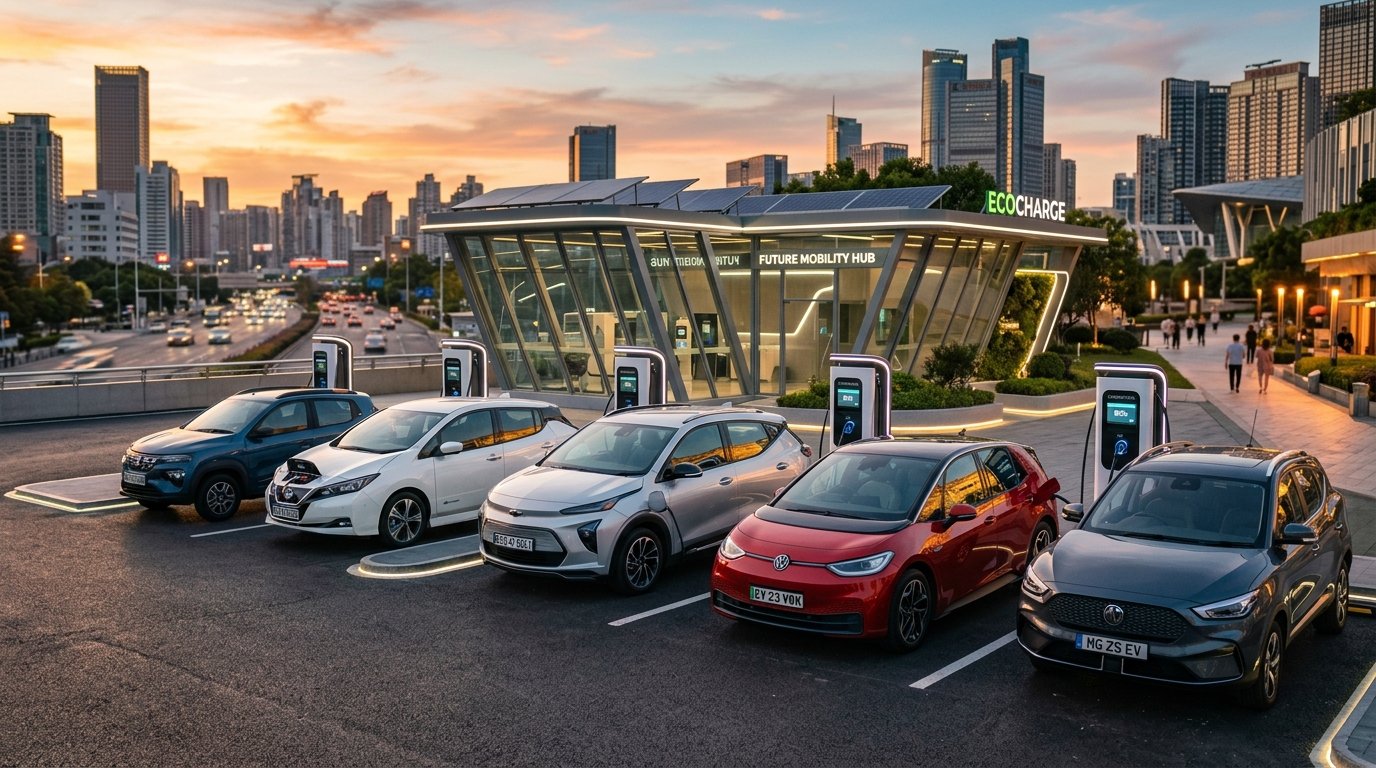
Funny thing is, a few years back I used to roll my eyes whenever somebody started preaching about electric cars. You know the type. They’d talk about “the future of mobility” while standing next to some overpriced EV that cost more than a small apartment in certain cities. Meanwhile I was over there calculating gas prices with mild despair and pretending my aging sedan didn’t make suspicious noises every Tuesday morning.
But stuff changes.
Slowly at first… then all at once.
Somewhere between ridiculous fuel prices, endless maintenance bills, and one painfully awkward breakdown outside a grocery store parking lot — in the rain, obviously — I started paying attention to EVs differently. Not as futuristic toys. More like practical machines. Which felt weird to admit, honestly.
And here we are in 2026, where buying a decent electric car under $30,000 no longer sounds like a terrible financial decision cooked up by YouTube influencers.
That’s the good news.
The bad news? Some affordable EVs are still kinda irritating to live with. Yeah. Nobody says that part loudly enough. Online reviews throw giant range numbers at your face and act like every electric car is basically a spaceship now. Reality’s messier. One car has amazing range but software that behaves like it’s going through an emotional crisis. Another drives beautifully but charges slower than a dying phone from 2014.
So after driving a handful of these things — borrowing some, renting a couple, spending unhealthy amounts of time at charging stations staring blankly into the void — I ended up with opinions. Strong ones, actually.
Some cars surprised me.
Some exhausted me.
One nearly made me miss gas stations, which is saying a lot.
So… What Actually Matters in a Cheap EV?
Everybody gets hypnotized by range figures first. I did too.
“400 miles!”
“Ultra-long-range battery!”
“Drive from Earth to the moon probably!”
Okay maybe not that last one, but you get it.
Truth is, most people barely drive enough daily to justify obsessing over massive battery numbers. Commute. Coffee run. Grocery store. Maybe a late-night drive because life feels weird and music sounds better after midnight. That’s the average routine.
After spending time with EVs, I realized smaller details matter way more than expected.
Seat comfort matters. A lot.
Bad touchscreen menus become infuriating weirdly fast.
Charging speed matters more than giant advertised range.
And heaven help you if the backup camera lags for two seconds too long.
That tiny annoyance will haunt your soul in parking lots.
Also — and this surprised me — some EVs just feel stressful. Hard to explain. Too many menus. Too many alerts. Too much trying to feel futuristic. You end up missing physical buttons like an old friend.
The best budget EVs? They quietly stay out of your way.
That’s underrated.
Chevrolet Equinox EV — The One That Makes the Most Sense

I almost ignored this car completely.
Seriously. The Equinox EV looked so… normal online that I assumed it’d be forgettable. Like oatmeal. Functional but emotionally unexciting.
Then I drove it.
And weirdly enough, that “normal” feeling became the entire point.
Nothing feels overly complicated. You don’t climb inside and suddenly need a software engineering degree to adjust the air conditioning. The controls make sense. The ride feels smooth. Visibility’s good. It just behaves like a car made for actual humans instead of tech demos.
Honestly, after some overly futuristic EVs, that felt refreshing.
The range is excellent for the money too. Easily enough for commuting, road trips, errands — normal life stuff. And unlike certain cheaper EVs, the cabin doesn’t feel like somebody cut corners everywhere to save twelve dollars.
Now, is it exciting? Not really.
But you know what? Reliability and comfort become sexy eventually. Usually around the third time another car glitches for no reason.
I’d probably skip the absolute base trim though. Felt a little bare-bones. Not awful… just slightly rental-car-ish.
Still, if somebody texted me:
“Hey, I want a practical EV without drama.”
Yeah. This is probably the first thing I’d mention.
Hyundai Kona Electric — Tiny, Easy, Weirdly Likeable

This thing feels made for city life.
Not in an annoying marketing way either. I mean genuinely easy to live with.
Parking becomes effortless. Traffic feels less exhausting. Tight streets stop feeling like tactical combat missions. After driving oversized SUVs for a while, hopping into the Kona felt almost therapeutic. Little car. Big relief.
And thank God Hyundai kept physical buttons around.
I need whoever made that decision to receive a bonus immediately.
Some car companies act like every function should live inside touchscreens now. No. Stop doing that. I shouldn’t need three taps and a software update just to warm my seat.
The Kona avoids most of that nonsense.
Range is solid too — especially for city commuters. Would I personally choose it for constant long highway drives? Hmm… maybe not. It can do it, sure, but the car feels happiest weaving through urban chaos and surviving grocery store parking lots.
Which, let’s be honest, is where many of us spend half our lives anyway.
Nissan Leaf — Older, Simpler, Still Alive Somehow

The Leaf has entered that strange phase where people either defend it passionately or treat it like ancient technology discovered in a cave.
Truth’s somewhere in the middle.
Yeah, it feels older than newer EVs. You notice it fast. The design isn’t flashy. The software feels dated. It lacks that glossy “future!” energy automakers love pushing these days.
But you know what it does well?
Basic transportation.
And honestly, there’s something respectable about that.
A friend of mine drives an older Leaf daily and barely spends anything maintaining it. No dramatic stories. No endless dealership visits. It just quietly handles commuting duties while asking for very little in return.
Would I recommend it for cross-country road trips? Absolutely not. Charging support still feels behind competitors, and that becomes frustrating once you leave predictable city routes.
But for local driving? School pickups? Daily errands?
Still useful. Still affordable. Still relevant.
Even if internet car forums act personally offended by its existence.
Kia Niro EV — Probably the Most Underrated One Here

Nobody really brags about owning a Niro EV.
And maybe that’s why it works so well.
It doesn’t scream for attention. Doesn’t try to reinvent transportation. Doesn’t bombard you with unnecessary gimmicks and startup-company energy.
It simply… works.
After driving one for several days, I kept noticing tiny practical details. Smart storage spaces. Comfortable ride quality. Controls that made sense immediately without needing tutorials or Reddit threads.
The whole car feels calm somehow.
That sounds like a strange compliment, but certain vehicles make everyday driving feel mentally noisy. The Niro doesn’t. You just get in and go.
Now yes — highway wind noise becomes noticeable eventually. Especially at higher speeds. Not catastrophic, just there. Like a faint reminder that physics exists.
Still, for stress-free commuting? Excellent option.
Maybe one of the smartest purchases here honestly.
Charging at Home Changes Everything. Seriously.
This part gets overlooked constantly.
If you can charge at home, owning an EV becomes dramatically easier. Like… absurdly easier.
You stop visiting gas stations entirely. That weird smell of gasoline disappears from your weekly routine. You wake up with a charged battery every morning and eventually stop thinking about it altogether.
That’s when EV ownership finally clicks.
Apps like:
- PlugShare
- ChargePoint
- Electrify America
help massively during road trips too.
Although — and I say this with love — public charging stations still occasionally feel held together by optimism and outdated software.
I once stood beside a charger for ten straight minutes restarting an app while another driver stared at the screen like it had personally betrayed him. Real bonding moment there.
So before buying an EV, try public charging first. Seriously. One test run teaches you more than fifty influencer reviews filmed with cinematic drone footage.
Mistakes People Make? Oh, Plenty.
Biggest one: buying based purely on hype.
A flashy EV with giant screens and insane acceleration sounds cool until you realize your daily routine mostly involves sitting in traffic behind somebody who forgot how turn signals work.
Another mistake? Ignoring insurance costs.
Some EVs are sneaky expensive to insure because repairs cost more and parts availability can get weird. Definitely check insurance before signing anything. Please. Future-you will appreciate it.
Also — people massively overestimate how much range they actually need.
Unless you’re routinely driving across multiple states every week like some kind of caffeinated traveling salesman from a 1980s movie, you probably don’t need absurd battery capacity.
Comfort matters more.
Convenience matters more.
Peace of mind matters way more.
So Which One Would I Buy?
Honestly?
Probably the Chevrolet Equinox EV.
Not because it’s the flashiest. It definitely isn’t. But it feels balanced in a way many affordable EVs still struggle to achieve. Comfortable, practical, simple enough for normal people, and genuinely pleasant during everyday driving.
That counts for a lot.
Now if I lived entirely inside crowded city traffic? The Hyundai Kona Electric would become really tempting.
And if budget mattered more than anything else, I’d still give the Nissan Leaf a serious look despite its age.
Funny enough, affordable EVs used to feel like compromises you reluctantly accepted.
Now? They mostly just feel like cars.
Which sounds boring… until you realize that’s probably the biggest compliment electric cars could’ve earned.