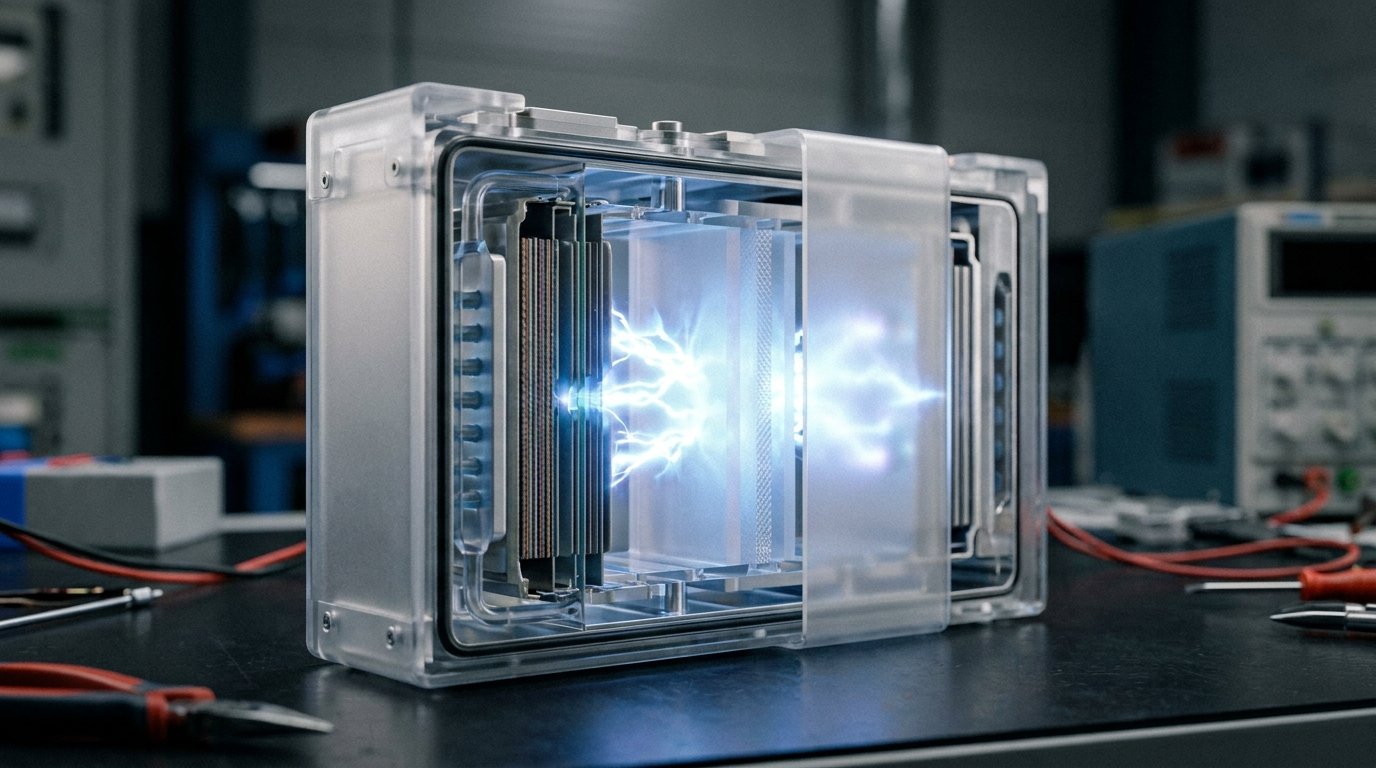
As of June 2026, EV battery technology has moved on considerably from the early Leaf era — but the headlines about solid-state batteries are still mostly that: headlines. What’s actually changed for UK buyers is faster charging, better cold-weather performance, and the first real signs of vehicle-to-grid (V2G) tech arriving at mainstream price points. This article cuts through the noise on what matters now versus what’s still years away.
Why Battery Tech Matters More Than Range Numbers
Most people shopping for an EV fixate on range. Fair enough. But after testing several EVs on UK roads over the past year, I’d argue charging speed and battery behaviour in winter are more important than raw WLTP figures. A car rated at 300 miles WLTP that degrades to 210 miles in January on a cold motorway run, and takes 45 minutes to get from 20% to 80% at a BP Pulse rapid charger, is a very different machine to one rated at 250 miles that delivers 220 in the cold and charges at 150kW consistently.
That gap — between spec-sheet numbers and real-world UK driving — is almost entirely down to battery chemistry and thermal management. So let’s talk about what’s actually in these batteries, what’s coming, and what it means if you’re buying in the next 12 to 18 months.
What’s Actually In EV Batteries Right Now
Lithium-Ion: Still the Standard, But Getting Better
Every mainstream EV you can buy in the UK today uses some variant of lithium-ion chemistry. The differences lie in the cathode materials — NMC (nickel manganese cobalt) versus LFP (lithium iron phosphate) — and they matter more than most buyers realise.
LFP batteries, used in the base Model 3 and MG4 standard range, are cheaper to produce, more thermally stable, and tolerate regular 100% charging without significant degradation. The trade-off is lower energy density: you need a heavier, larger pack to get the same range as NMC. For urban driving — a London commuter covering 40 miles a day — LFP often makes more practical sense. For longer motorway runs to Scotland or Wales, NMC’s higher energy density per kilogram is worth having.
The good news: both chemistries have improved. Silicon-dominant anodes (replacing graphite) are appearing in newer packs, pushing capacity up without increasing physical size. The Hyundai Ioniq 6 77.4kWh version benefits from this, which is partly why its real-world range holds up better than its WLTP figure might suggest.
Where Charging Speed Actually Comes From
Peak charging speed depends on three things: the car’s onboard charger and battery management system, the charger’s output, and temperature. UK drivers often focus on the charger — understandably, given the reliability complaints about BP Pulse and early Pod Point units — but the car’s own limits matter just as much.
The Ioniq 6 can accept up to 240kW on a compatible ultra-rapid charger. The standard Tesla Model 3 Long Range peaks at around 170kW. The Vauxhall Astra Electric is capped at 100kW. At Gridserve’s Electric Forecourts, where 350kW chargers are available, only a handful of current UK cars can meaningfully use that headroom. Most buyers are still charging at 50kW or 150kW rapids, where the differences between cars narrow considerably.
The practical upshot: if you regularly drive routes over 150 miles, pay close attention to 10–80% charging time at 150kW, not peak kW figures. That’s the number that actually affects your journey time at a Gridserve or Ionity hub.
Solid-State Batteries: What the UK Timeline Actually Looks Like
Every automotive publication — including this one — has been writing about solid-state batteries for several years. The pitch is compelling: higher energy density than lithium-ion, faster charging, better safety (no liquid electrolyte to leak or catch fire), and longer cycle life. Toyota, Nissan, and QuantumScape have all made announcements. So where are they?
Genuinely mass-market solid-state EVs at reasonable UK prices are still 2028 at the earliest, and 2030 is a more honest estimate for sub-£40,000 versions. The manufacturing challenge is significant — producing solid electrolyte layers consistently and at scale without defects is a different problem to lithium-ion cell production, which took 20 years to become affordable.
Toyota’s solid-state announcement in 2023 targeted 2027 production. As of mid-2026, that timeline has quietly slipped. Nissan’s partnership with NASA is more cautious, targeting 2028. None of these initial vehicles will be cheap.
If you’re buying an EV in 2026, do not wait for solid-state. Current lithium-ion tech — particularly the latest NMC and LFP variants — is genuinely good. The gap between today’s batteries and solid-state will matter most for long-distance drivers and fleet operators, less so for typical UK daily use.
Current UK EV Battery Comparison (2026)
| Model | Battery Type | Usable Capacity | WLTP Range | Peak Charge Rate | Price From (OTR) |
|---|---|---|---|---|---|
| Tesla Model 3 Long Range AWD | NMC | 75kWh | 390 miles | 170kW DC | £44,990 |
| Hyundai Ioniq 6 Standard Range RWD | NMC | 53kWh | 240 miles | 135kW DC | £36,495 |
| MG4 Standard Range | LFP | 49kWh | 218 miles | 88kW DC | £26,995 |
| BMW iX1 xDrive30 | NMC | 64.7kWh | 272 miles | 130kW DC | £48,085 |
| Vauxhall Astra Electric | NMC | 54kWh | 258 miles | 100kW DC | £35,555 |
WLTP figures from Vehicle Certification Agency (VCA). OTR pricing as of June 2026; check manufacturer sites for current offers. Always verify range via Zap-Map’s real-world range tool before purchase.
Vehicle-to-Grid in the UK: Closer Than You Think
V2G lets your EV export electricity back to the grid — or directly to your home — during peak demand. The concept has been in pilot programmes for years. In 2026, it’s starting to arrive at consumer level.
Octopus Energy’s Vehicle Smart Charge tariff now supports bidirectional charging for compatible vehicles, including the Nissan Leaf (40kWh and 62kWh with CHAdeMO) and the new Nissan Ariya in V2G-enabled trim. The economics are real but modest: Octopus’s Intelligent Octopus Go offers cheap overnight rates to charge, and you can export back at a higher daytime rate. For a typical UK household, the annual saving is estimated at £400–£800 depending on usage patterns — not transformative, but not nothing.
The catch: V2G currently requires specific compatible chargers (Wallbox Quasar 2 is the main home unit available in the UK, retailing around £1,099 installed) and a vehicle that supports bidirectional DC charging. Most EVs sold in the UK today do not. Tesla vehicles do not support V2G. The Ioniq 6 does not. For now, V2G is a feature to watch, not a buying decision driver — unless you’re specifically purchasing a Nissan Ariya or Leaf and have a compatible tariff.
What UK Buyers Get Wrong About Battery Tech
Warranty ≠ Performance Guarantee
Most EV manufacturers offer 8-year/100,000-mile battery warranties, with coverage typically kicking in if capacity drops below 70%. That sounds reassuring. In practice, a battery that degrades to 71% capacity — just outside warranty territory — in year six delivers meaningfully worse range than day one. Check Zap-Map’s used EV battery health guides and, for used purchases, ask for a Geotab or OBD2 health check before buying.
UK Winter Performance Is Worse Than You Think
WLTP testing doesn’t replicate a January morning in Manchester or Edinburgh. Lithium-ion batteries lose efficiency in cold temperatures — both because the chemistry slows down and because cabin heating draws heavily from the pack. Real-world winter range reductions of 20–35% are common on non-heat-pump equipped EVs. Cars with heat pumps (Kia EV6, Ioniq 6, BYD Atto 3) fare significantly better. If you’re buying for year-round use in the north of England or Scotland, heat pump presence is a non-negotiable feature to check.
Fast Charging Too Often Isn’t Great Long-Term
Frequent DC rapid charging at very high rates generates more heat in the battery than AC home charging. Most modern BMS systems limit peak charge rates when temperatures are high to protect cell longevity — but repeated rapid charging sessions do incrementally accelerate degradation compared to regular AC overnight charging. The practical advice: use rapid chargers when you need to on a journey, but don’t rapid-charge daily if you have home charging available.
Frequently Asked Questions
Q: Is LFP or NMC better for a UK buyer in 2026?
A: Depends on your use. LFP (MG4, base Model 3) suits urban drivers who want to charge to 100% daily without worrying about degradation. NMC suits longer-distance drivers who need higher energy density — more range from the same physical pack size. LFP also handles cold temperatures less well, which matters more in northern UK regions.
Q: Should I wait for solid-state batteries before buying an EV?
A: No, not if you need a car in the next 12–24 months. Mass-market solid-state vehicles at mainstream UK prices are unlikely before 2029–2030 at the earliest. Today’s lithium-ion tech is good enough for most use cases, and there are strong deals available on current-generation EVs.
Q: How does V2G work in the UK and which cars support it?
A: V2G lets your EV export stored energy back to the grid or your home. In the UK, it currently works with CHAdeMO-equipped vehicles (Nissan Leaf, Ariya V2G edition), requires a bidirectional charger like the Wallbox Quasar 2, and is supported by tariffs including Octopus Intelligent. Most CCS-standard EVs do not yet support V2G, though this is changing in 2026–2027 model years.
Q: Does rapid charging damage my EV battery?
A: Occasional rapid charging on journeys won’t cause noticeable damage. Daily DC rapid charging as a substitute for home charging will accelerate degradation marginally over several years. Modern battery management systems limit peak rates to protect longevity, but the general advice is to use home AC charging (7kW) as your primary method and rapids as-needed on routes.
Q: What’s the best EV for cold-weather range in the UK?
A: Models with heat pumps retain range best in winter. The Kia EV6, Hyundai Ioniq 6, and BYD Atto 3 are strong performers. The heat pump extracts warmth from ambient air rather than using resistive heating, which cuts the energy drain from cabin heating in cold weather significantly.
Bottom Line for UK Buyers in 2026
The battery technology in EVs available today is genuinely mature enough for most UK driving. The headline innovations — solid-state, breakthrough energy density — are real but not yet at a price point or availability that changes your 2026 buying decision. What should change your decision: whether the car has a heat pump, what its real-world 10–80% charging time is at 150kW, and whether the battery chemistry suits your charging habits (LFP for daily 100% charging, NMC for longer range).
V2G is worth understanding but not worth buying around unless you have a specific setup that makes the economics work. Check the EV battery category for deeper dives on individual models, and use Zap-Map’s real-world range tool to sense-check any range figures before you commit.
The next 18 months will bring better charging speeds, incremental range improvements, and the first genuine V2G-capable mainstream models. None of that is a reason to hold off buying today if you need a car.